
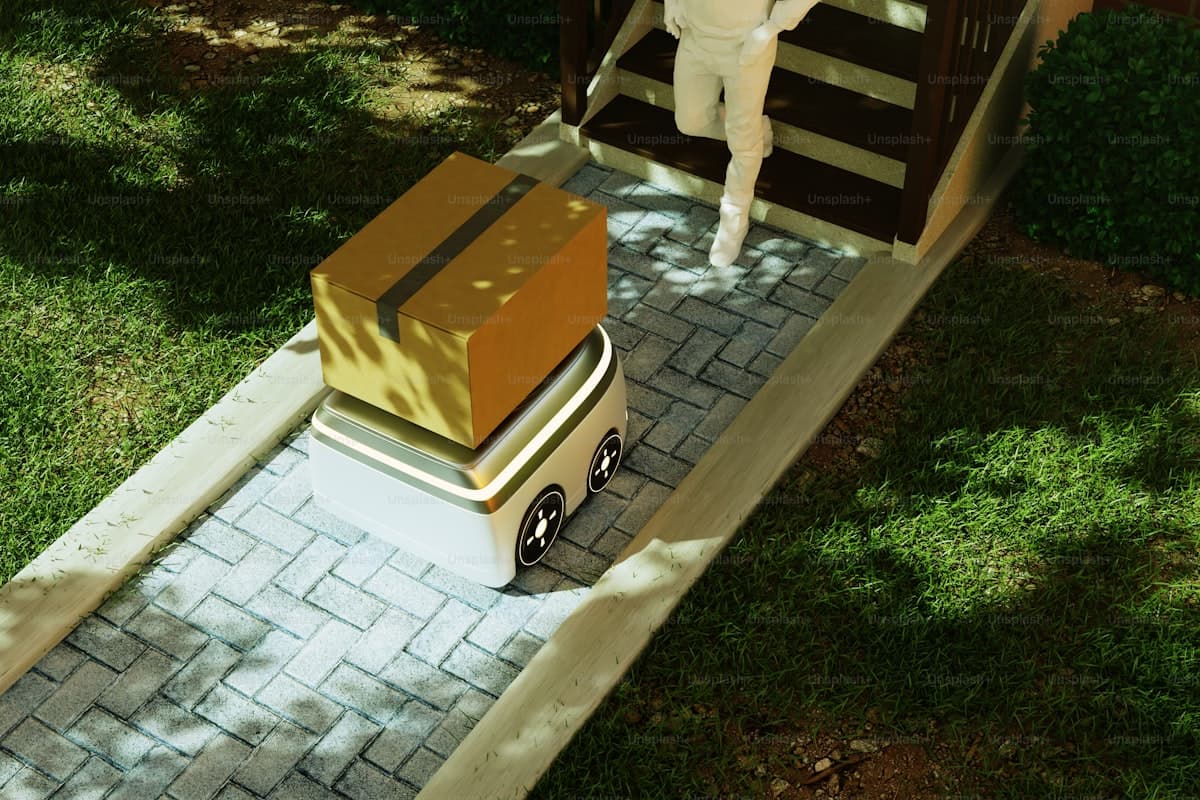
University campuses are proving to be the ideal testing ground and commercial deployment environment for autonomous delivery robots. The combination of defined boundaries, pedestrian infrastructure, and a tech-savvy user base has made campus delivery one of the most successful commercial robotics use cases to date.
Why Campuses Work
University campuses offer nearly ideal conditions for autonomous delivery:
- Defined boundaries — the delivery zone is clearly mapped and contained
- Pedestrian infrastructure — sidewalks, crosswalks, and low vehicle speeds
- Dense demand — thousands of potential customers in a compact area
- Tech-savvy users — students adopt app-based ordering quickly
- Recurring demand — meals, snacks, and convenience items drive daily repeat orders
How Campus Delivery Works
Services like Starship operate fleets of 50+ small delivery robots on a single campus. Students order through a mobile app, selecting from partner restaurants and stores. A robot is dispatched to the restaurant, staff load the order into the robot's locked cargo bay, and the robot navigates to the student's location.
The student receives a notification when the robot arrives and unlocks the cargo bay through the app. The entire process takes 15–30 minutes.
Student Adoption
Campus delivery robots see remarkably high adoption rates:
- 70–80% of students use the service at least once per semester
- 30–40% become regular users (weekly orders)
- Average delivery time of 15–25 minutes
- 95%+ delivery success rate without human intervention
- Peak demand aligns with late-night study sessions — exactly when traditional delivery is most expensive
The Business Model
Robot delivery services typically charge a small delivery fee (£1–£2.50) and take a commission from partner restaurants. The unit economics improve with density — more robots, more restaurants, and more orders in a concentrated area drive down the per-delivery cost.
For universities, the service is a student amenity that enhances campus life at no cost to the institution. For restaurants, it expands their delivery radius without hiring drivers.
Expanding Beyond Food
While food delivery is the primary use case, campus robots are increasingly handling:
- Convenience store items — snacks, drinks, pharmacy basics
- Library book returns
- Inter-departmental mail and packages
- Campus store purchases
The same infrastructure that delivers burritos can deliver textbooks.