
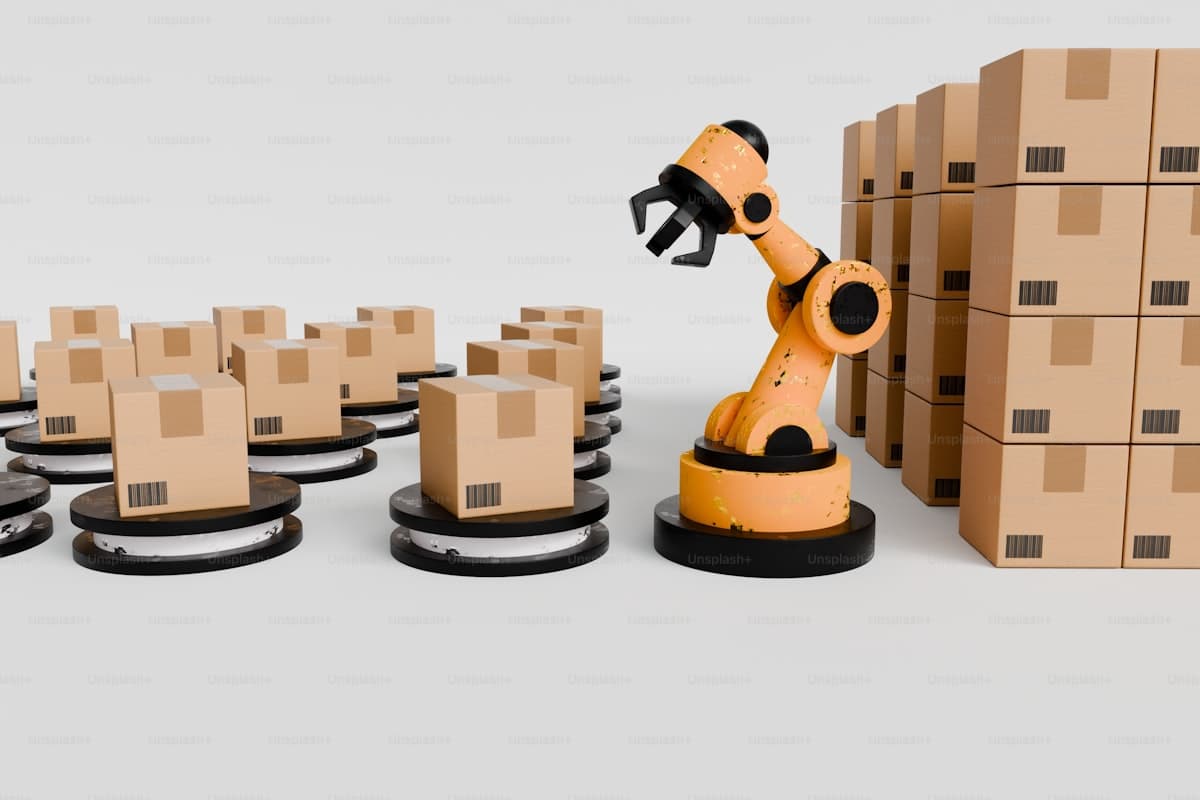
E-commerce growth has pushed warehouse operations to their limits. The traditional "person-to-goods" picking model — where workers walk to shelves, pick items, and walk back — is inefficient and physically exhausting. Collaborative autonomous mobile robots (AMRs) offer a middle ground between fully manual operations and the capital-intensive automation of goods-to-person systems.
The Walking Problem
In a conventional warehouse, pickers spend 60–70% of their time walking between pick locations. Only 30–40% of their shift involves the actual value-adding activity of picking items. This wasted motion limits throughput and contributes to worker fatigue and injury.
How Collaborative Picking Robots Work
AMRs like the Locus Origin work with human pickers rather than replacing them. The system assigns orders to robots, which navigate to the correct aisle and guide the nearest available picker to the exact shelf location. The picker places the item in the robot's tote, confirms the pick, and the robot moves on — either to the next pick in the sequence or to a pack station.
The picker stays in their zone. The robot handles all the walking between zones and to pack stations.
Measured Results
Warehouses deploying collaborative AMRs consistently report:
- 2–3x increase in units picked per hour
- 50% reduction in picker walking distance
- 80% faster new employee onboarding (the robot guides them)
- 99.9% pick accuracy with scan verification
- Zero infrastructure changes — no conveyor belts, no racking modifications
The RaaS Advantage
Unlike traditional automation that requires millions in upfront capital, most AMR providers offer Robots-as-a-Service (RaaS) pricing. Operators pay per robot per month or per unit picked, converting a capital expense into an operating expense. This makes the technology accessible to mid-sized fulfilment operations, not just enterprise-scale warehouses.
Scaling Up and Down
Perhaps the most compelling advantage of collaborative AMRs is elasticity. During peak seasons, operators can deploy additional robots in days rather than months. When volume drops, robots can be returned or redeployed. This flexibility is impossible with fixed automation infrastructure.
Getting Started
- Pilot with 5–10 robots in a single zone to prove the concept
- Integrate with your WMS — most AMR platforms offer standard integrations
- Measure your baseline first — you need pick rate and walking data to prove ROI
- Train your pickers on the handoff workflow before go-live
- Scale based on data — expand to additional zones once you've validated the productivity gains